
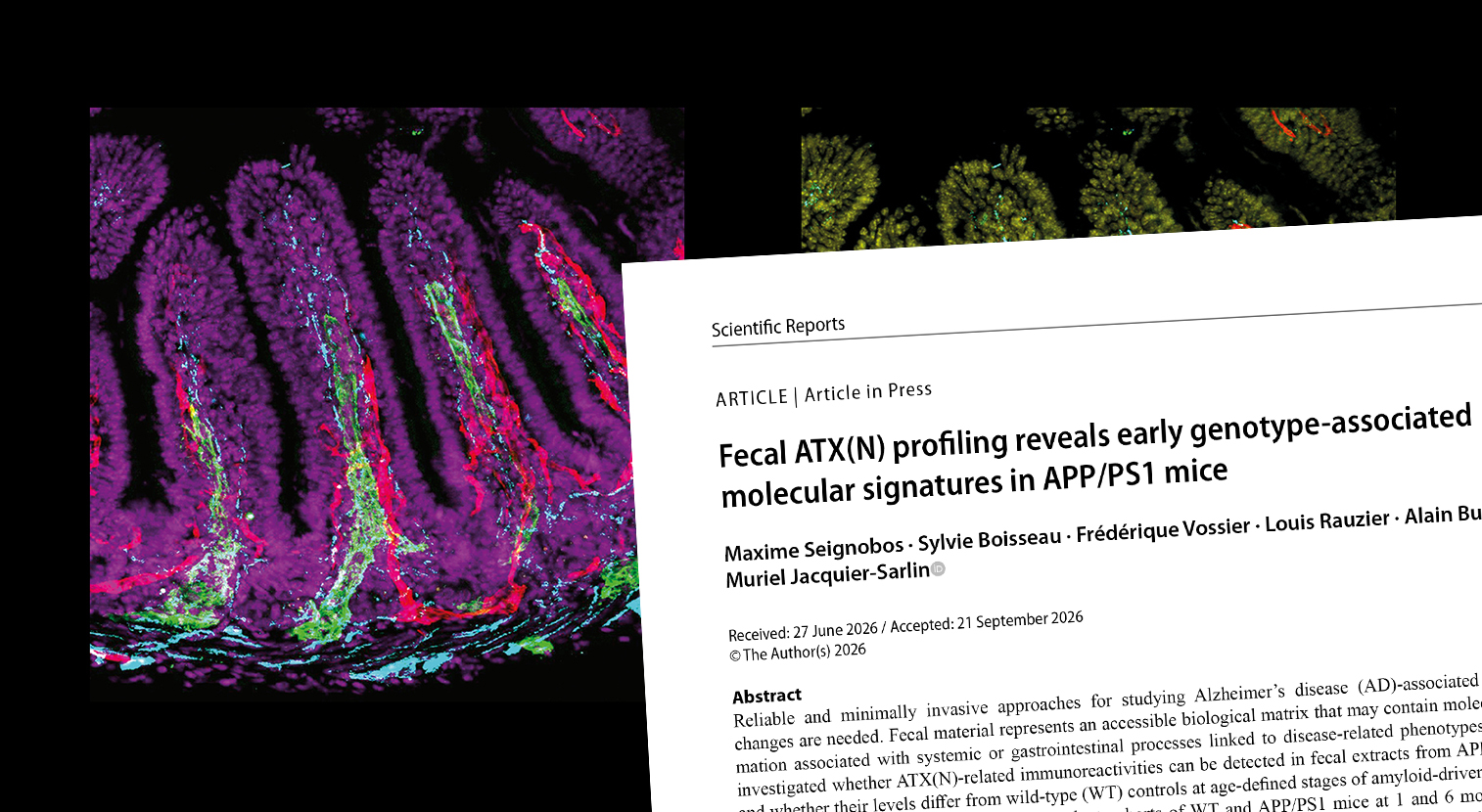
A study conducted at the Grenoble Institute of Neurosciences shows that several proteins associated with Alzheimer's disease can be detected in mouse stool samples and that some of these markers show changes at a very early stage, even before the amyloid plaques characteristic of the disease become detectable in the brain. Published in Scientific Reports, these findings open up a new avenue of research towards simple, non-invasive testing methods, whose relevance must now be evaluated in humans.
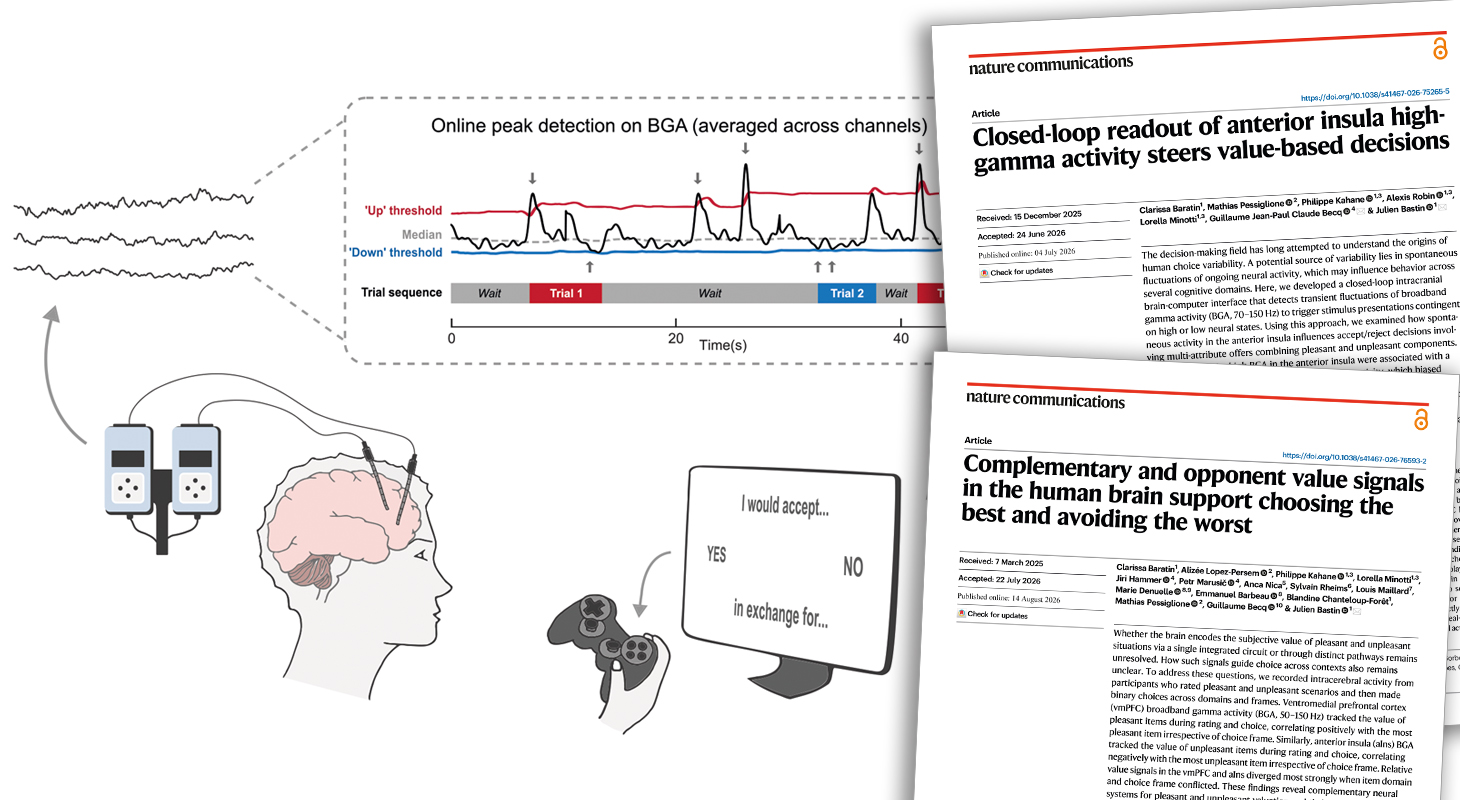
Two studies conducted at the Grenoble Institute of Neuroscience as part of Clarissa Baratin’s PhD research and published in Nature Communications show that our brain does not rely on exactly the same neural circuits to evaluate pleasant and unpleasant experiences, and that its activity immediately before a decision can influence our choices.
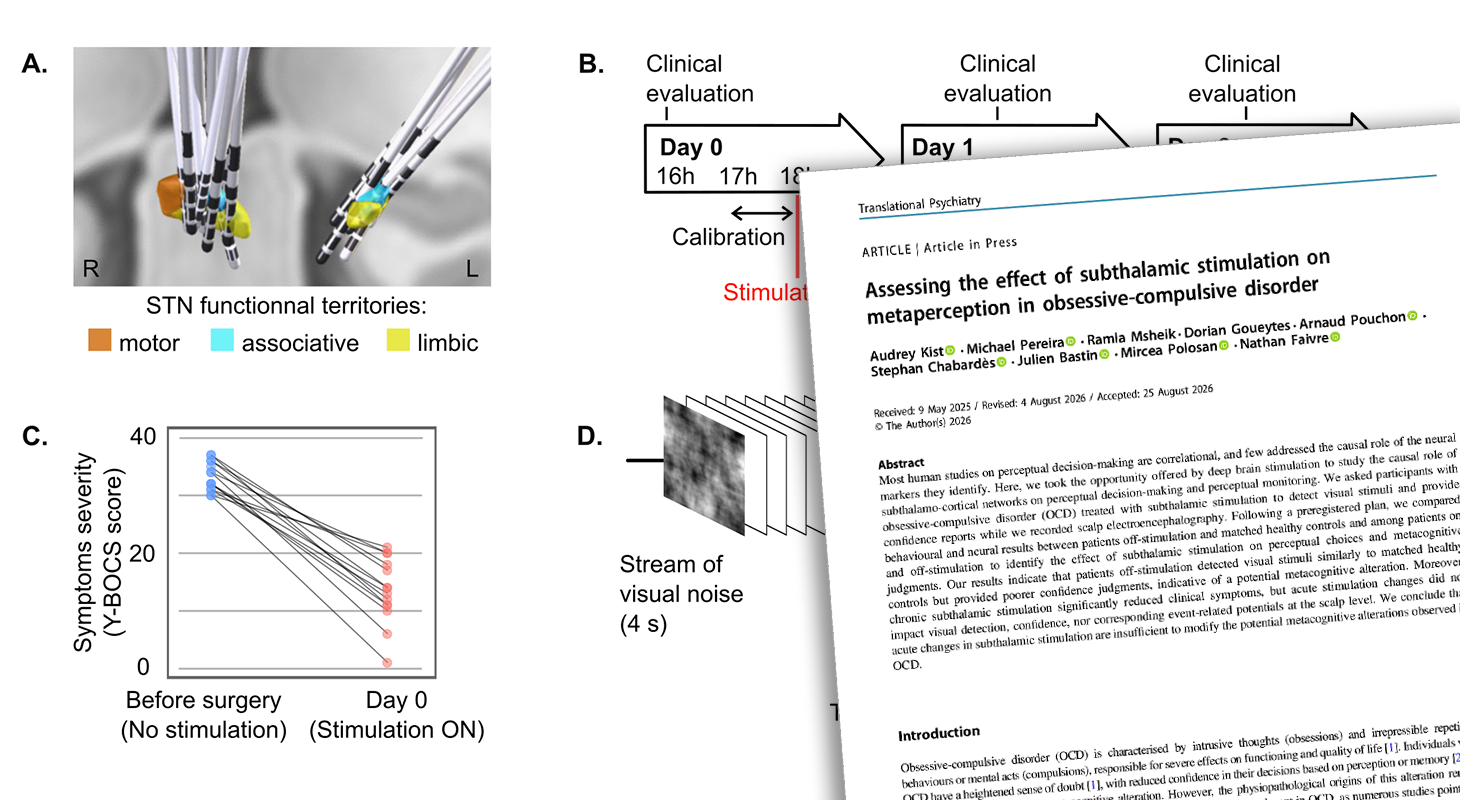
Doubting what we have seen, what we have done, or a decision we have just made: doubt is a prominent feature of obsessive-compulsive disorder (OCD). A study conducted at the Grenoble Institute of Neuroscience suggests that this doubt may not result from poorer visual perception, but could instead be linked to altered metacognition, the ability to evaluate one’s own perceptions.
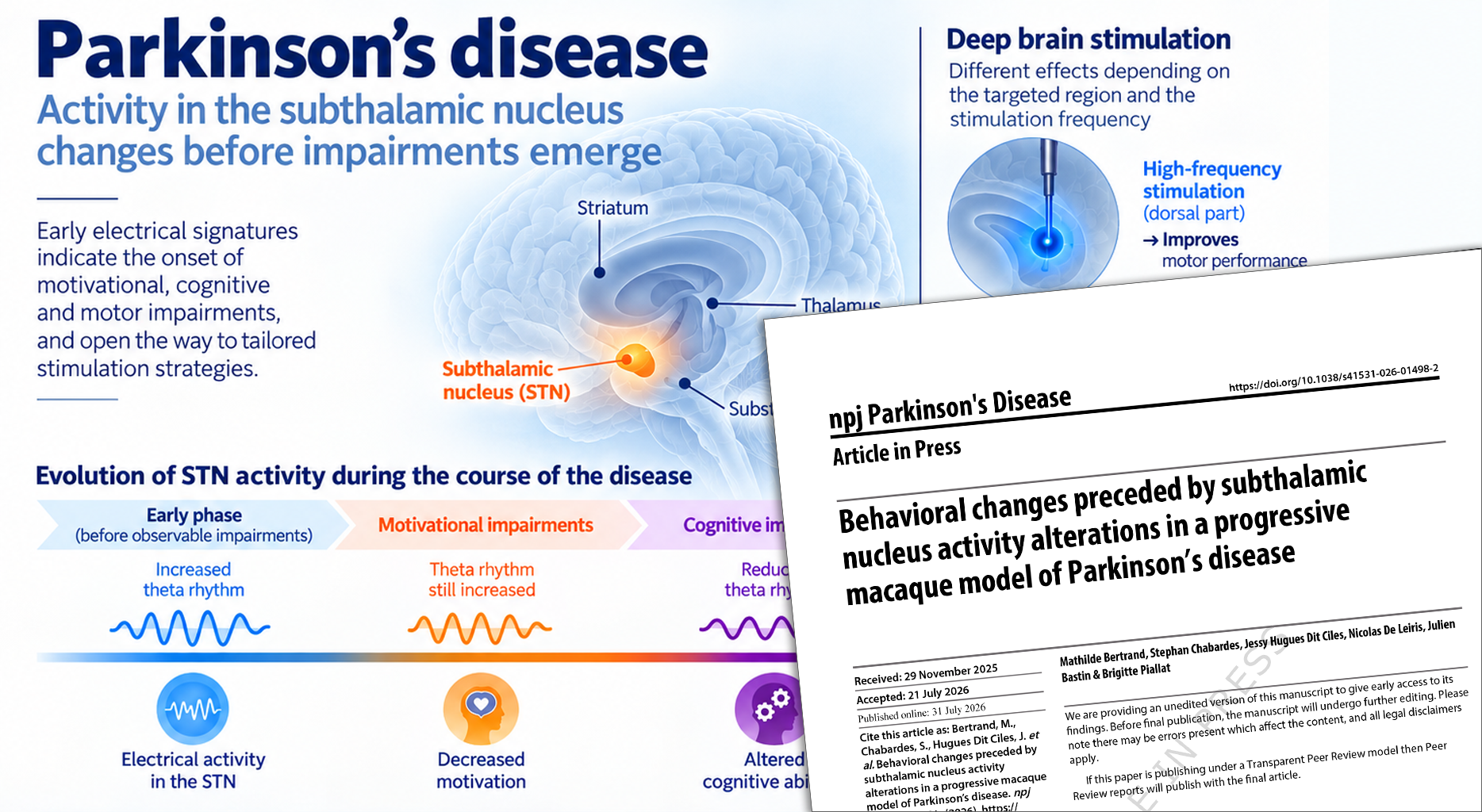
A study conducted at the Grenoble Institute of Neuroscience shows, in a progressive macaque model of Parkinson’s disease, that activity in the subthalamic nucleus changes before the onset of motivational, cognitive and then motor impairments. These findings could pave the way for deep brain stimulation strategies better tailored to each patient’s symptoms.
Events
News
A study conducted at the Grenoble Institute of Neurosciences shows that several proteins associated with Alzheimer's disease can be detected in mouse stool samples and that some of these markers show changes at a very early stage, even before the amyloid plaques characteristic of the disease become detectable in the brain. Published in Scientific Reports, these findings open up a new avenue of research towards simple, non-invasive testing methods, whose relevance must now be evaluated in humans.
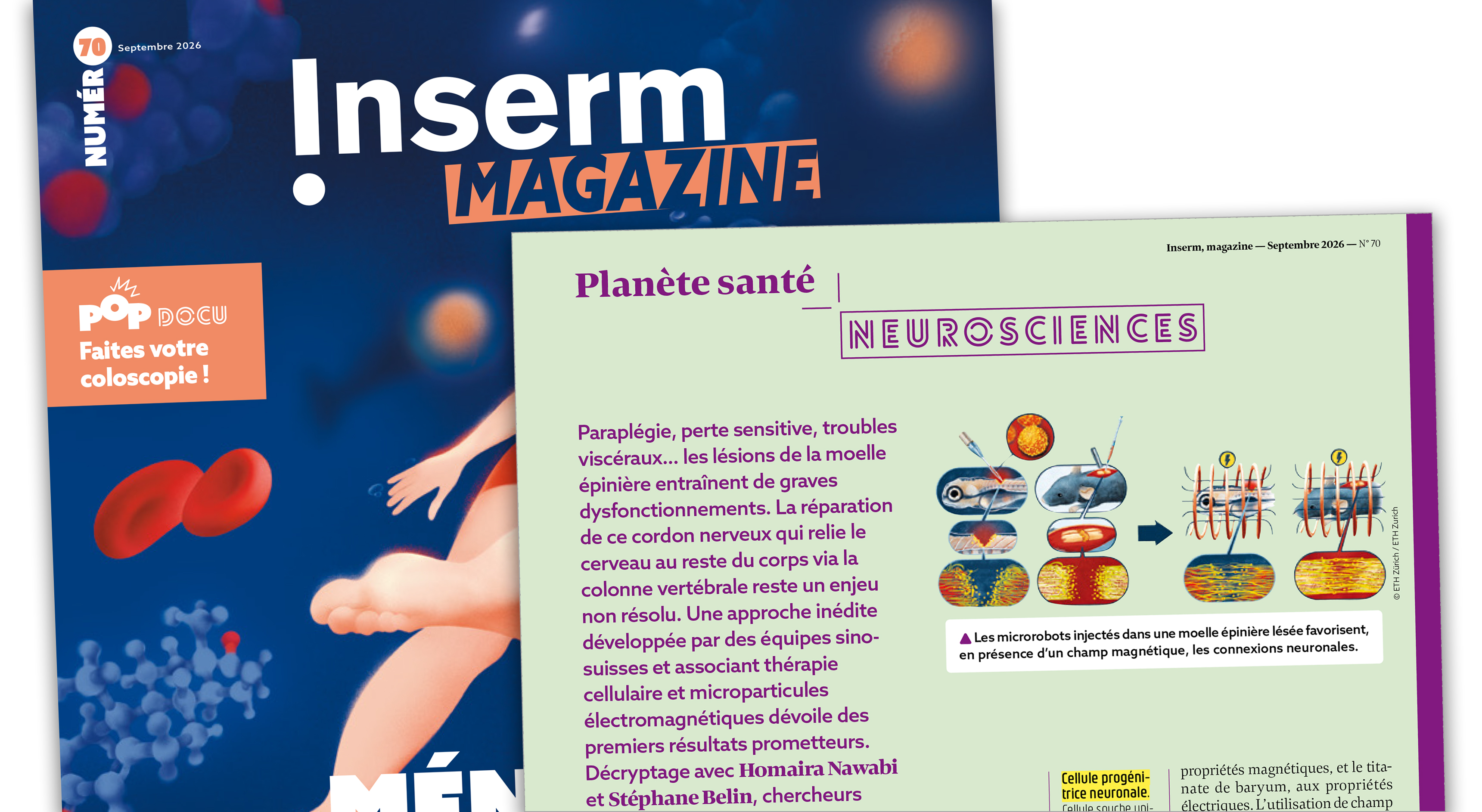
Dans le dernier numéro d'Inserm, le magazine, Homaira Nawabi et Stéphane Belin, chercheurs Inserm au Grenoble Institut des Neurosciences, décryptent une approche innovante qui pourrait ouvrir de nouvelles perspectives pour la réparation du système nerveux central.
Two studies conducted at the Grenoble Institute of Neuroscience as part of Clarissa Baratin’s PhD research and published in Nature Communications show that our brain does not rely on exactly the same neural circuits to evaluate pleasant and unpleasant experiences, and that its activity immediately before a decision can influence our choices.
Latest publications
- Fecal ATX(N) profiling reveals early genotype-associated molecular signatures in APP/PS1 mice.
Seignobos M., Boisseau S., Vossier F., Rauzier L., Buisson A. & Jacquier-Sarlin M.
Scientific Reports, 2026. - Closed-loop readout of anterior insula high-gamma activity steers value-based decisions
Clarissa Baratin, Mathias Pessiglione, Philippe Kahane, Alexis Robin, Lorella Minotti, Guillaume Jean-Paul Claude Becq & Julien Bastin
Nature Communications, publié le 4 juillet 2026. - Complementary and opponent value signals in the human brain support choosing the best and avoiding the worst
Clarissa Baratin, Alizée Lopez-Persem, Philippe Kahane, Lorella Minotti, Jiri Hammer, Petr Marusič, Anca Nica, Sylvain Rheims, Louis Maillard, Marie Denuelle, Emmanuel Barbeau, Blandine Chanteloup-Forêt, Mathias Pessiglione, Guillaume Becq & Julien Bastin
Nat Commun 17, 9760 (2026). - Assessing the effect of subthalamic stimulation on metaperception in obsessive-compulsive disorder
Audrey Kist, Michael Pereira, Ramla Msheik, Dorian Goueytes, Arnaud Pouchon, Stephan Chabardès, Julien Bastin, Mircea Polosan & Nathan Faivre
Transl Psychiatry (2026). doi.org/10.1038/s41398-026-04423-6 - Behavioral changes preceded by subthalamic nucleus activity alterations in a progressive macaque model of Parkinson’s disease
Mathilde Bertrand, Stephan Chabardes, Jessy Hugues Dit Ciles, Nicolas De Leiris, Julien Bastin & Brigitte Piallat
npj Parkinsons Dis. (2026). doi.org/10.1038/s41531-026-01498-2 - Impact of paired-housing on a preclinical model of alcohol use disorder
Cécile Gaudart, Mylène Wilt, Fanny Joly, Raphaël Goutaudier, Colin Deransart, Yvan M. Vachez, Sebastien Carnicella
Drug and Alcohol Dependence, Volume 287, 2026. doi.org/10.1016/j.drugalcdep.2026.113289. - Kinetochore proteins control microtubule dynamics in postmitotic neurons to regulate the formation of dendritic spines
Zhao G, Sharma A, Tang J, Aleman M, Liang X, Miner L, Qi J, Xiang W, Tian F, Goldberg Y, He Z, Shen K, Peris L, L Schwarz T.
Proc Natl Acad Sci U S A. 2026 May 5;123(18):e2520684123. doi: 10.1073/pnas.2520684123. - Ultrasound-assisted gene therapy mitigates Leigh syndrome pathology
Mathilde Faideau, Romain Clément, Sébastien Rigollet, Giorgia Benegiamo, Cassandra Cresson, Béatrice Blot, Robin Reynaud-Dulaurier, Sara Yjjou, Fanny Aprahamian, Sylvère Durand, Anthony Delalande, Emmanuel L Barbier, Vasile Stupar, Johan Auwerx, Michael Decressac
Brain,2026 Jan 23. doi: 10.1093/brain/awag026. - A frugal Spiking Neural Network for unsupervised multivariate temporal pattern classification and multichannel spike sorting
Sai Deepesh Pokala, Marie Bernert, Takuya Nanami, Takashi Kohno, Timothée Lévi & Blaise Yvert
Nature Communications vol. 16, Article number: 9218 (2025) - Synchrotron-generated microbeams as a radiosurgical alternative for drug-resistant epilepsies: Proof of concept in a mouse model of mesiotemporal lobe epilepsy
Loan Samalens, Camille Beets, Clothilde Courivaud, Sarvenaz Keshmiri, Jean-François Adam, Paolo Pellicioli, Emmanuel Luc Barbier, Raphaël Serduc, Antoine Depaulis
Epilepsia. 2025 Dec 23. doi: 10.1002/epi.70063. Online ahead of print - L-Dopa-modified microtubules lead to synapse instability in cultured neurons: possible implications in Parkinson’s disease therapy
Agustina Zorgniotti, Aditi Sharma, Sacnicte Ramirez-Rios, Chadni Sanyal, Martina Aleman, Yanina Ditamo, Marie-Jo Moutin, C. Gastón Bisig, Leticia Peris
J npj Parkinsons Dis. 11, 298 (2025). doi.org/10.1038/s41531-025-01143-4