
- Share
- Share on Facebook
- Share on LinkedIn
Communiqué, Accolade/Award / Team S.Carnicella
On July 31, 2026
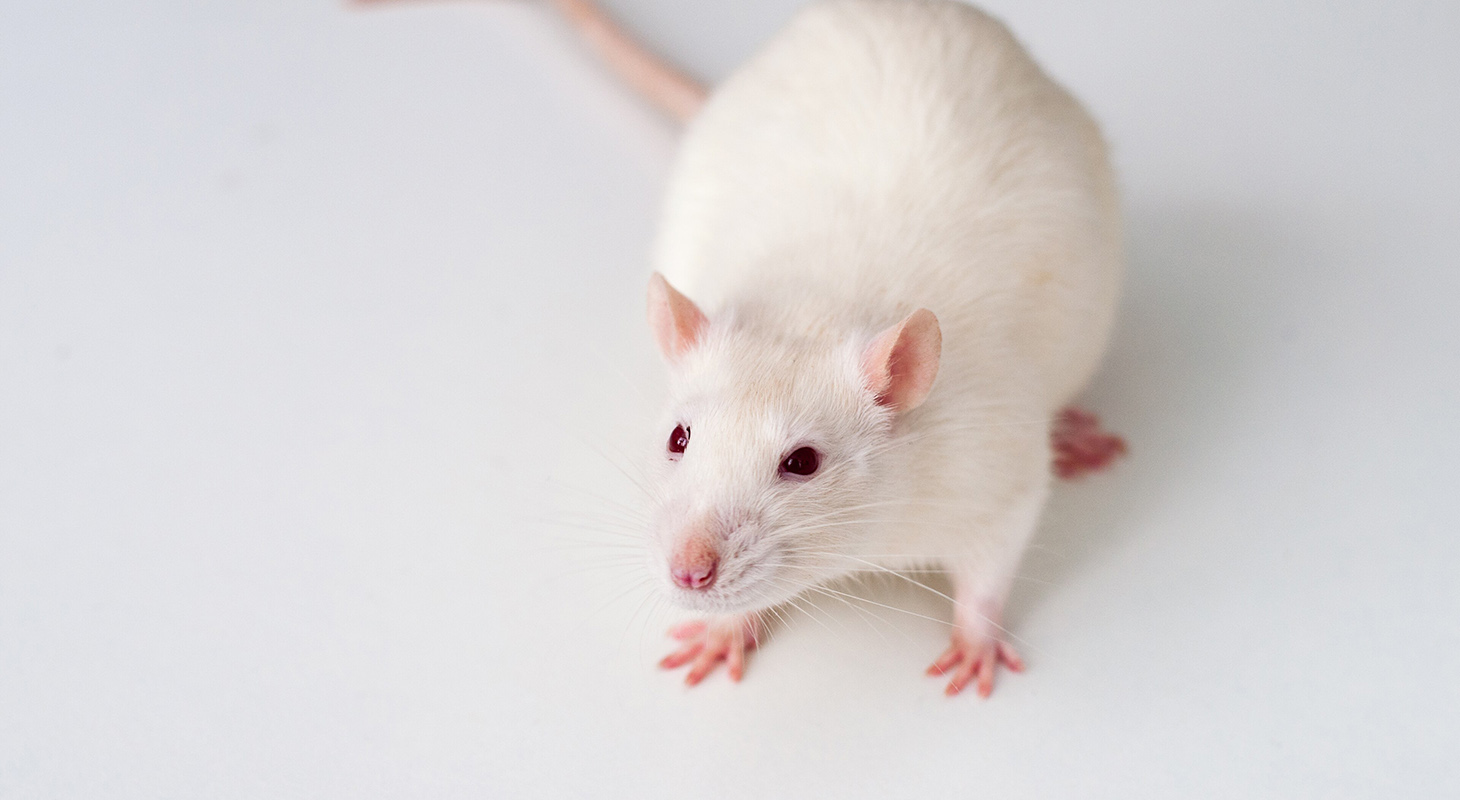
The EDHOSI2HAR project, led by Colin Deransart, a researcher at GIN, has received €30,000 in funding from the France Centre 3R (FC3R) research consortium to study the effects of social isolation in adult rats. In particular, it will assess whether daily handling can help mitigate the potential consequences of isolation on animal welfare.
In animal research, some protocols require rats to be temporarily housed in individual cages. Such isolation makes it easier to monitor their clinical condition, accurately measure their food intake or prevent another animal from damaging an implanted device.
However, because rats are social animals, depriving them of contact with other rats can affect their welfare and alter their behaviour, with potential consequences for research findings.
Effects of isolation still poorly understood in adult rats
The negative effects of social isolation have been extensively studied in young rats separated from other rats shortly after weaning, at a time when social interactions play an important role in the development of the brain and behaviour. In these animals, isolation can notably lead to increased anxiety and aggression, as well as changes in motivation or sensitivity to rewards.
The situation is far less clear when isolation begins in adulthood. Few studies have been conducted and their findings are sometimes contradictory. The effects observed appear to vary according to the duration of isolation, the sex of the animals and their housing conditions.
In practice, researchers already try to mitigate the potential effects of isolation by maintaining regular interactions with the animals. However, the effectiveness of these measures has yet to be scientifically established.
“An observation is not a scientific conclusion. We need to measure and quantify the actual impact of isolation to determine whether daily handling can genuinely mitigate its effects,” explains Sébastien Carnicella, head of the “Physiopathology of Motivation” team, who will supervise the project with Colin Deransart.
Assessing the effects of daily handling
The EDHOSI2HAR project (Effect of Daily Handling On Social Isolation In Individually Housed Adult Rats) will compare four different housing conditions. Some rats will be housed in pairs and others individually. In each of these two situations, some of the animals will be gently handled by the experimenter for five minutes every day: they will be picked up, stroked and gradually familiarised with human contact.
The study will involve male and female adult rats from two strains commonly used in neuroscience research.
Over a two-month period, the researchers will monitor changes in the animals’ weight and measure various biological markers of stress. A series of behavioural tests will then be used to assess potential changes in their anxiety levels, social interactions, motivation, curiosity and sensitivity to rewards.
This approach should make it possible to distinguish the specific effects of isolation from those associated with other experimental parameters. It will also assess the extent to which daily handling by the experimenter—a simple and easily reproducible intervention—can mitigate the consequences of isolation.
Developing evidence-based recommendations
The project follows the ethical 3Rs framework for animal research, which aims to:
- Replace the use of animals wherever possible;
- Reduce the number of animals used;
- Refine protocols to minimise the constraints placed on animals.
The findings could lead to practical recommendations concerning the housing conditions of adult rats. They will also help to improve assessments of the severity of experimental protocols involving isolation when applications for research project authorisation are submitted.
The issue is also a scientific one: if isolation alters the animals’ behaviour or physiology, it may introduce bias into experiments and make their findings more difficult to interpret.
“Whether or not isolation has an impact, it is extremely important to know,” concludes Sébastien Carnicella.
Please note: the team is recruiting an M2 intern for this project: view the internship offer.
Date
À lire sur le sujet
L’expérimentation animale est‑elle encore pertinente ? L’exemple de la maladie de Parkinson
Article publié par The Conversation, 28 avril 2025
de Colin Deransart, enseignant-chercheur en neurosciences, Grenoble Institut des Neurosciences (UGA), Bertrand Favier, Dr Vétérinaire, Maitre de conférences à l'UFR de Chimie Biologie de l'Université Grenoble Alpes, Sabrina Boulet, Professeur des Universités, Neurosciences (UGA), Véronique Coizet, Chargée de recherche en Neurosciences, Grenoble Institut des neurosciences (Inserm)
- Share
- Share on Facebook
- Share on LinkedIn