
- Share
- Share on Facebook
- Share on LinkedIn
Communiqué / Epilepsy
On January 20, 2026
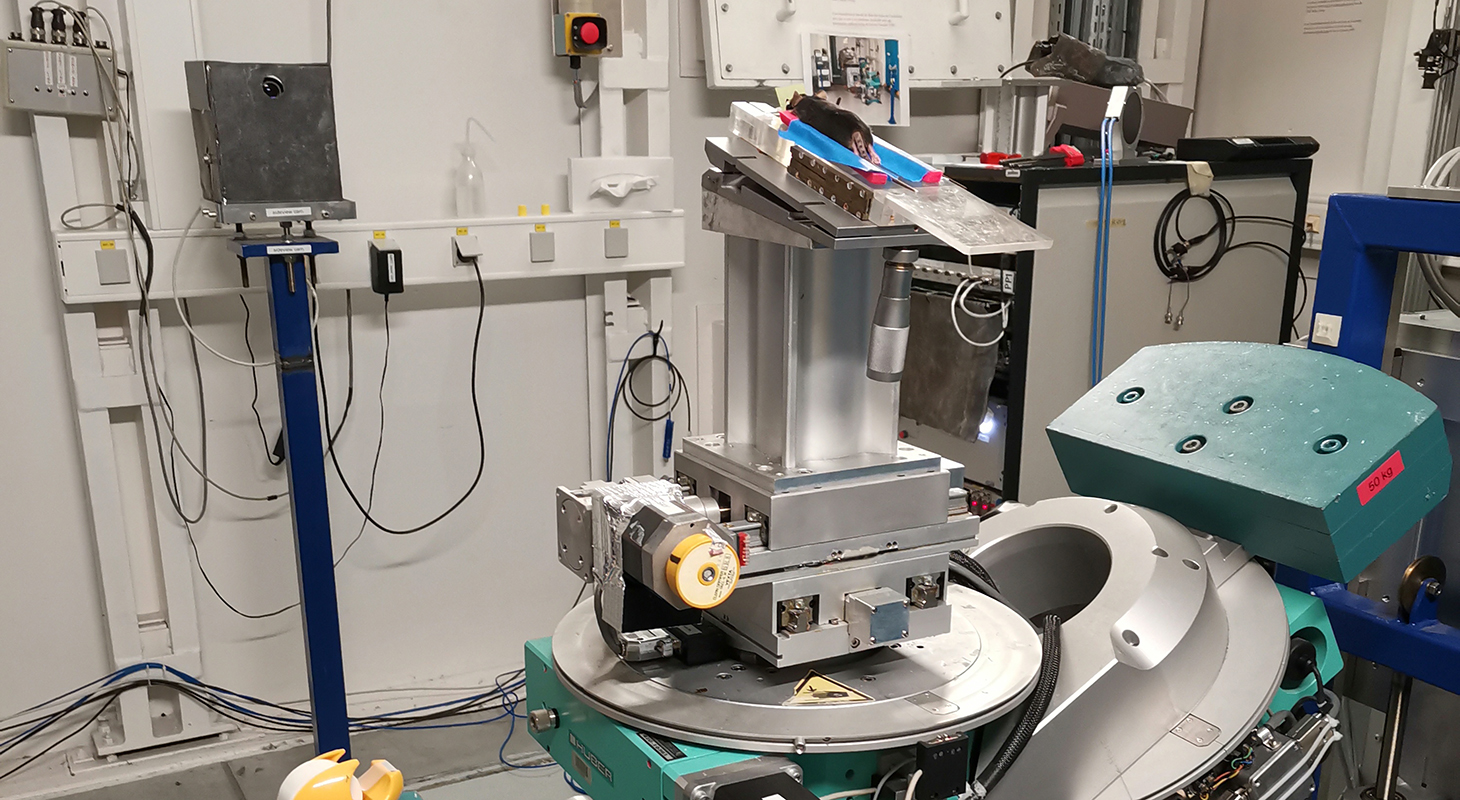
In a study published at the end of 2025 in the journal Epilepsia, a GIN research team shows, in a mouse model, that X-ray microbeams can significantly reduce epileptic activity while limiting side effects on surrounding brain tissue.
Nearly one third of people with epilepsy do not respond to drug treatments. For certain focal forms of the disease, particularly mesial temporal lobe epilepsy, surgery remains the standard therapeutic option, despite being highly invasive and associated with significant neurological risks.
For more than a decade, Antoine Depaulis’ team at the Grenoble Institute of Neurosciences has been exploring a new radiosurgical approach to treat drug-resistant epilepsies, based on Microbeam Radiation Therapy (MRT) generated by synchrotron radiation.
Ultra-precise radiosurgery
MRT relies on the use of extremely thin X-ray beams (around 50 micrometres wide), delivered at very high doses but spatially fractionated. Unlike conventional radiotherapy techniques, this approach produces highly localized microlesions, largely sparing adjacent brain structures.
Initially developed in neuro-oncology, MRT was tested here in a well-established mouse model of mesial temporal lobe epilepsy, a severe focal epilepsy that is resistant to medication.
Fewer seizures, with limited toxicity
The results show that targeted irradiation of the epileptic focus leads to a significant reduction in both the frequency and duration of seizures for approximately two months following treatment. The researchers also observed that distributing the radiation dose across several irradiation trajectories improves therapeutic efficacy while reducing tissue toxicity.
“Our primary goal was to demonstrate that a therapeutic effect was possible,” explains Loan Samalens, first author of the study. “This study is a proof of concept: it shows that the more the dose is distributed across multiple trajectories, the better the results, both in terms of efficacy and tolerance.”
Histological analyses confirm that the induced lesions remain confined to the microbeam paths, with no oedema or brain necrosis, and only limited alterations to surrounding tissues.
Towards a non-invasive alternative for patients?
These findings represent an important step towards the development of new therapeutic strategies for drug-resistant epilepsies, which affect around 30% of people with epilepsy. Further studies are nonetheless required to assess long-term effects, better understand the mechanisms of action of MRT, and refine the safest and most effective irradiation parameters.
“The next step will be to follow the animals over longer periods, study behavioural effects, and better understand how these microlesions modify epileptogenic neural networks,” adds Loan Samalens.
In the longer term, this approach could pave the way for a non-invasive alternative to surgery for certain severe forms of epilepsy, although significant technological and clinical challenges remain before any application in humans.
Reference :
Synchrotron-generated microbeams as a radiosurgical alternative for drug-resistant epilepsies: Proof of concept in a mouse model of mesiotemporal lobe epilepsy
Loan Samalens, Camille Beets, Clothilde Courivaud, Sarvenaz Keshmiri, Jean-François Adam, Paolo Pellicioli, Emmanuel Luc Barbier, Raphaël Serduc, Antoine Depaulis
Epilepsia. 2025 Dec 23. doi: 10.1002/epi.70063. Online ahead of print.
Date
- Share
- Share on Facebook
- Share on LinkedIn