
- Share
- Share on Facebook
- Share on LinkedIn
Communiqué / Abroad, Health, The university in general
On April 20, 2026
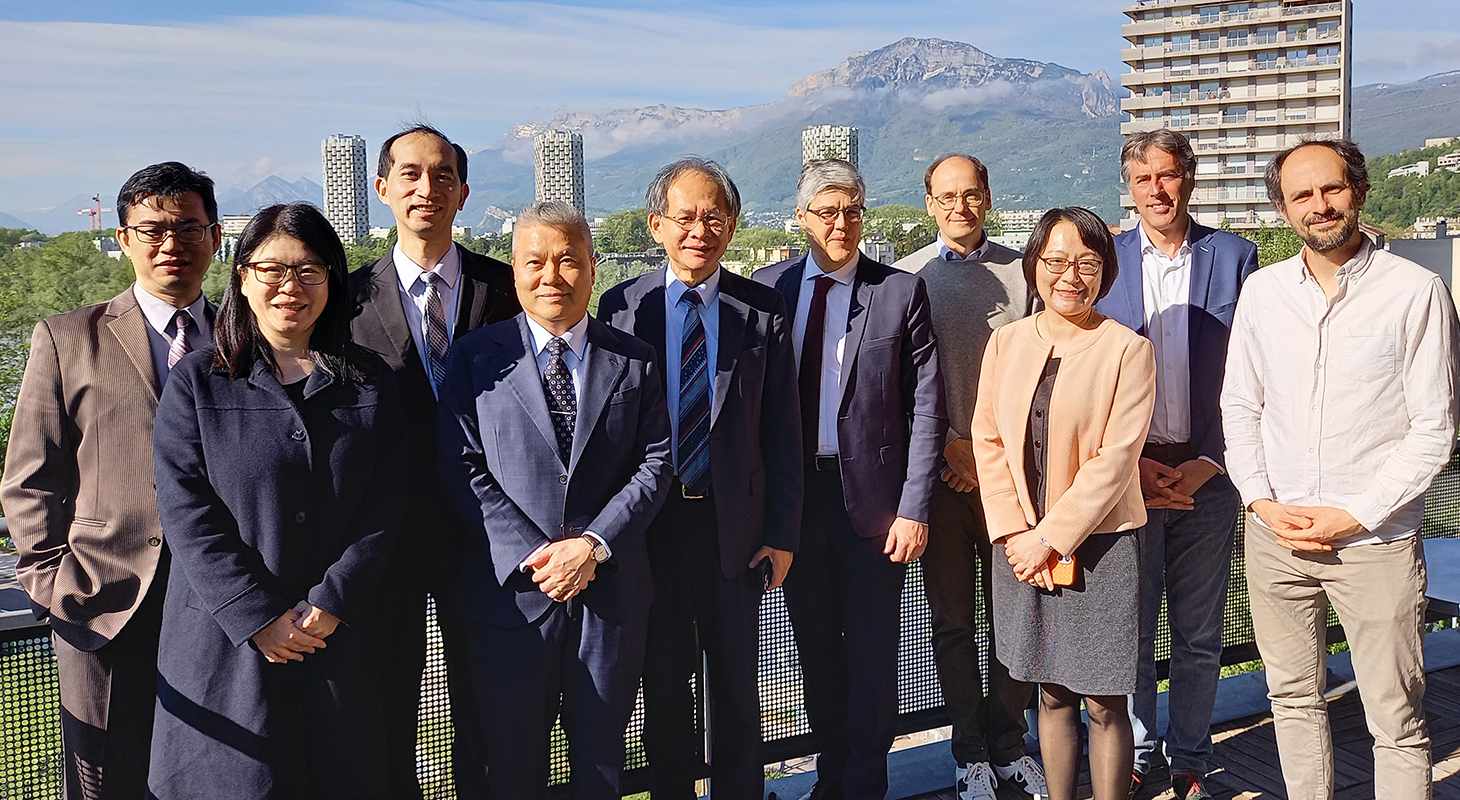
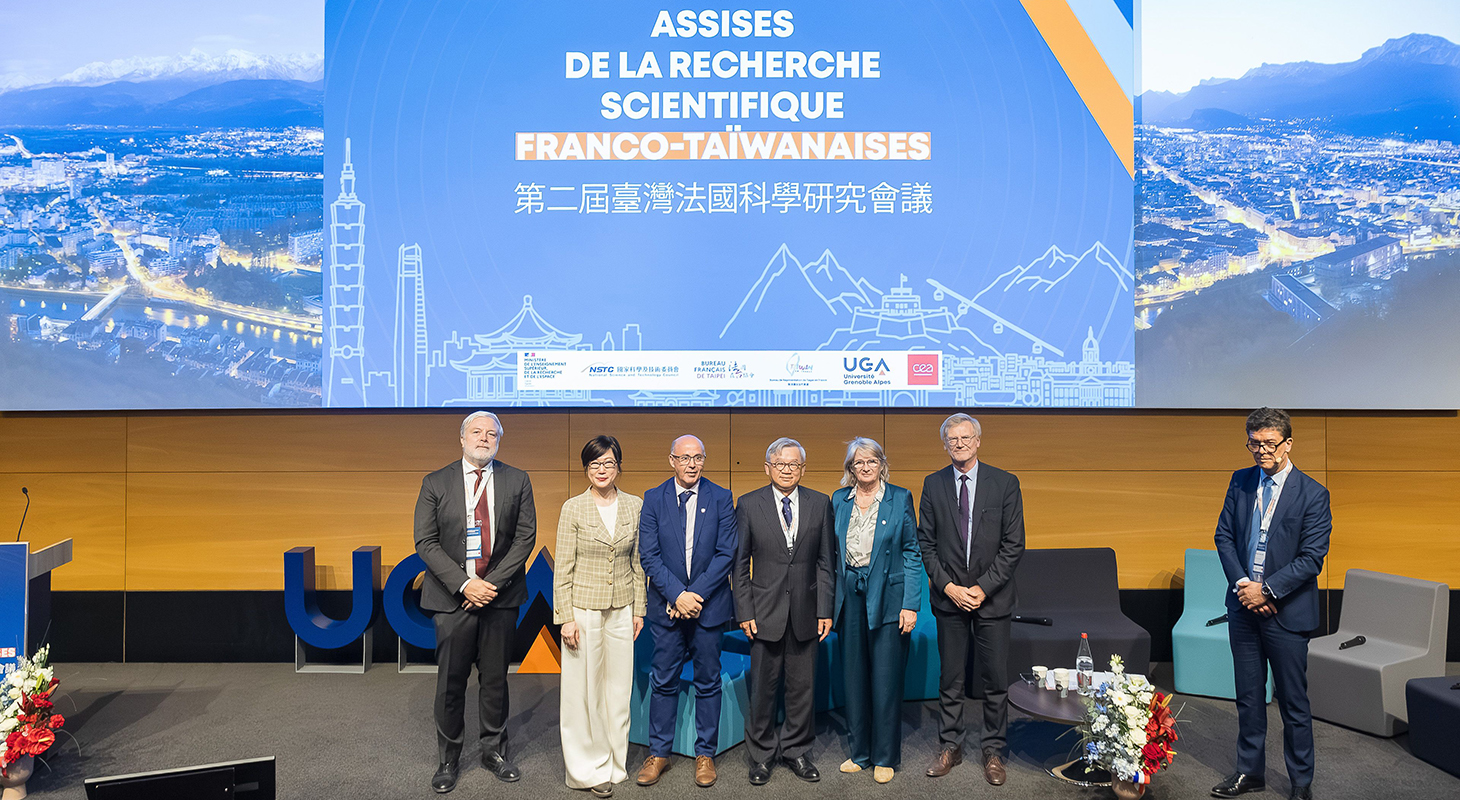
On April 17 and 20, 2026, the Grenoble Institute of Neuroscience (GIN) welcomed two delegations of Taiwanese researchers visiting Grenoble as part of the Franco-Taiwanese Science Conference.
Bringing together nearly 200 participants, including researchers, institutional representatives, and stakeholders from research organizations and universities, this second edition followed on from a first meeting held in Taipei two years ago, as well as the scientific and technological cooperation agreement signed with Université Grenoble Alpes in 2023.
Over two days, around 90 experts exchanged on eight strategic fields: quantum technologies, semiconductors, artificial intelligence, cybersecurity, health, energy, ocean science, and space.
Four thematic visit tracks were offered: semiconductors, digital technologies, health, and energy. In this context, around twenty Taiwanese researchers visited the Grenoble Institute of Neuroscience on April 17 and 20, during visits led by Alain Buisson, Deputy Director of GIN, and Emmanuel Barbier, its Director.
On April 20, the morning session opened with presentations by Olivier Palombi, Dean of the Grenoble Faculty of Medicine, and Thomas Jouve, who provided an overview of biomedical research at Université Grenoble Alpes, highlighting the close interactions between Grenoble Alpes University Hospital and research laboratories.
This dynamic environment contributes to positioning Grenoble at the forefront of innovation in biotechnology, as illustrated by the presentation of the start-up Biocellis by its CEO, Vincent Poher.
The delegation then continued its visit of the Grenoble Institute of Neuroscience, guided by Emmanuel Barbier. From one team to another, the researchers discovered the diversity of research topics developed at GIN, as well as its technological platforms, including PIC-GIN.
“We wanted to showcase the strong integration between fundamental research, technological platforms, and clinical applications, which makes Grenoble a particularly fertile environment for international collaborations,” emphasized the Director of GIN.
Date
- Share
- Share on Facebook
- Share on LinkedIn